How Do You Know When a Transplanted Plant Is Dead
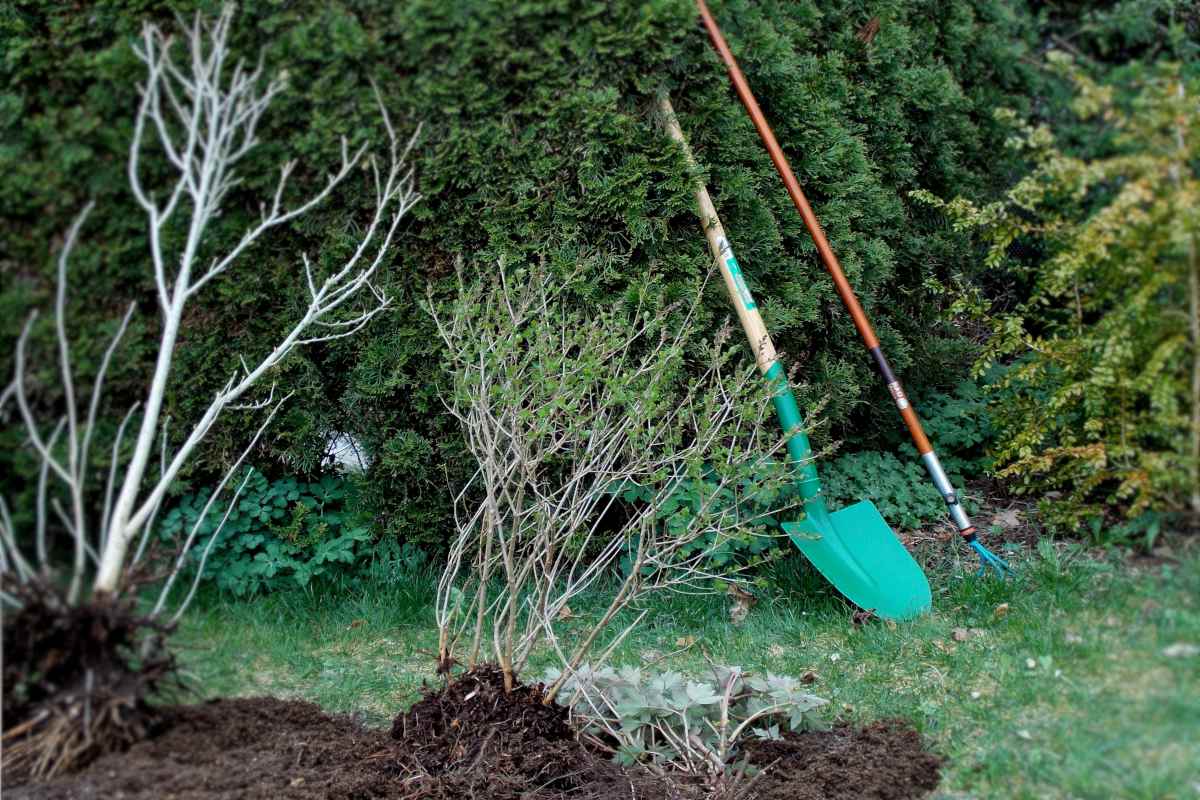
Transplant shock is a combination of three factors. Upon moving a tree or institute, it undergoes:
- a form of physical abuse
- a reduction in size
- and ends upwards in a new environment.
Each of these factors contribute to transplant stupor.
Let's take a look at what transplant daze symptoms are, and the three challenges a found faces: physical damage, downsizing, and new surround.
Read besides:
- Minimizing transplant daze
Symptoms of transplant stupor
A plant that was newly dug up and moved from i place to the some other may show signs of :
- wilting or falling leaves,
- dying branches,
- abrupt fall of flowers or fruit,
- or it might die altogether.
This is chosen transplant shock.
For plants and herbs purchased in pots such equally lettuce, coriander and parsley, transplant shock can likewise trigger bolting and going to seed.
When does transplant shock occur?
Transplant shock may occur when:
- transplanting seedlings,
- moving a plant around the garden, or even displacing a institute grown in a container or pot!
- planting a tree or shrub from a garden eye,
- to a certain caste, even when simply repotting or topdressing a plant.
It also applies to newly purchased houseplants. These leave the optimized environs of a nursery for a completely different setting: your ain business firm!
Can transplant stupor occur without moving the institute?
Actually, although not related directly to transplantation, very similar shock can occur in plants.
New buildings or removal of nearby constructions
- This changes both exposure and current of air patterns, which can result in shock to the plant.
- Shade where there wasn't will stunt growth.
- Sun where at that place was shade might requite the tree sunburn.
This can also happen if a lumberjack fells a large tree, opening a immigration upwards. In forestry, sunburn occurs frequently on copse that remain in full sun later on clear-cuts .
Underground changes
- When construction comes virtually roots, impairment is most inevitable.
- Setting up a root barrier or a rhizome trap ways cut large roots off. It'south important to prune accordingly.
Physical abuse – cleaved branches and roots
Moving a establish cannot exist performed without some degree of transplant damage to the institute. Roots, branches and leafage are all affected.
Roots endure virtually, and wounds as well mark branches, too. This is typically due to cutting roots with the spade, pruning, breakage, parts of the plant dying off due to mishandling, transportation and such.
When roots are exposed to the air, tiny invisible rootlets dry upwards and die off. Harm starts even within the first minute!
- So haste when the plant root ball is out in the open is important…
- … just it'due south also critical to stay soft-handed.
- Act delicately to avert creating larger wounds by twisting and bruising the plant.
Focusing on goals is good, but being conscientious is good, likewise!
Downsizing – less roots, less branches
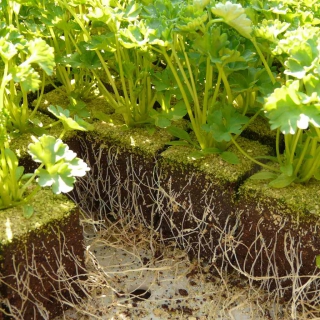 A establish that has been transplanted from the where it used to grow in the ground typically loses one-half or more of its root system and production system: leaves, branches, etc.
Pruning branches is as of import as handling roots
For a transplant to succeed, remove branches and leaves to compensate for loss of roots.
The found had developed its root system to see increased apportionment of sap, h2o and nutrients as it grew. All of a sudden, the vessels that channel all these are oversized. Their shape and volume doesn't match the plant'due south needs as perfectly. Information technology costs the plant more to shift nutrients around than it did before.
This is the master logic backside the exercise of evening out what is removed. If half the root system stays behind in the transplant, and then information technology'south important to reduce leafage by half too.
- It'due south important to ensure that the proportion of roots stays relatively the same to that of live branches and leaves.f
Also, remember that the majority of the "active" roots are around the circumference. Roots around the trunk are still good, but ordinarily they've already depleted the soil around them and aren't equally important. When transplanting, they'll have to start getting to work again, which takes a while!
A new growing environment
In the long run, the most important gene is the change in growing environment. When displacing a plant, the following usually alter radically:
- soil blazon – even in the aforementioned garden, soil may be dirt on one side and humus-rich on the other, with "spots" of different soil types embedded.
- drainage – drainage and availability of h2o differs both because of different soil types and different rainfall patterns (overshadowing trees, differences in gusts of current of air, etc…)
- exposure – unless y'all're moving from one corner of an open field to some other, there will always exist a different pattern of exposure to lord's day and shade.
- companion plants – to a bottom degree, neighboring plants will also influence the newcomer. A relationship always arises between a plant and its neighbors, so having new neighbors influences this, too.
A plant, equally it grows, responds intimately to its environs, to "bloom where information technology is planted". The shock of alter tin can frequently be overcome, simply in some cases proves too much to cope with, and the institute dies.
- How to make transplanting easier on the institute
Plants vulnerable to transplant shock
Some plants are more at chance of transplant shock than others. This is often related to the nature of their root organization.
Trees with shallow root systems
Copse that accept shallow, far-reaching root systems take a lot of trouble surviving a transplant.
- This is because almost all of their active roots are lost in the transplant.
- For these, it's amend to dig out a shallower but wider swath of soil.
This type of tree is common forth bodies of water. Shallow roots resist root rot better.
Examples of shallow-root trees that are difficult to transplant include katsura and weeping willow.
Smart tip well-nigh reducing transplant shock
A study was conducted on immature birch saplings that were transplanted and sugar water. Dousing the soil and watering with sweetened water significantly reduced mortality and transplant stupor. Why non try it out for your own shrub transplants? Add together a cup and a quaternary of sugar to 1 gallon of water (ten oz per gallon or 70g per liter). Mix well and use for watering for the first season.
Read besides:
- How to repot a plant
- Planting tips to ensure survival
- Climate-proof planting
Transplant shock on social media
Click to open up the post in a new tab on the relevant social media site. Follow us there, comment, and share!
Create or join a topic on our tree and shrub forum, too.
 |  |  | ||
Credits for images shared to Nature & Garden (all edits by Gaspard Lorthiois):
Spade and shrub (also on social media) by Anita Menger under Pixabay license
Parsley root-to-foliage ratio by Hans Braxmeier nether Pixabay license
Shock upon planting (also on social media) past Rosalyn & Gaspard Lorthiois, own work
Source: https://www.nature-and-garden.com/gardening/transplant-shock.html
0 Response to "How Do You Know When a Transplanted Plant Is Dead"
Post a Comment